8 Myths About Electric Cars
16 March 2026
Electric cars are gaining popularity across Canada. Despite their growing adoption, many misconceptions still persist. Between concerns about range, cost, and winter driving, it’s not always easy to separate fact from fiction.
Here are 8 common myths about electric vehicles—and what you really need to know.
Myth 1: Electric cars don’t have enough range
This is probably one of the most widespread myths. For a long time, early electric car models had limited range, which helped create this perception.
Today, the reality is quite different. Most modern electric vehicles offer a range of between 350 and 500 km, and some models even exceed this distance under optimal conditions.
Furthermore, most drivers travel less than 50 km per day, which means that a single home charge can cover several days of driving. For most users, range is therefore no longer a daily obstacle.
Myth 2: You can’t take long trips in an electric car
Many people think that electric vehicles are only suitable for city driving. However, it is entirely possible to take long trips in an electric vehicle.
Networks of fast-charging stations (Level 3) are expanding rapidly in Canada and the United States. These stations often allow you to recharge a significant portion of the battery’s range in less than an hour, which is ideal for breaks during a trip. Keep in mind that it’s strongly recommended to stop charging at 80% at these stations, not only because the charging speed slows down after that point, but also because the cost of charging increases significantly once you exceed the 80% threshold.
In addition, several apps make it easy to plan a route by identifying available charging stations along the way. Long-distance travel in an electric car is therefore becoming easier and easier!
Myth 3: Electric cars can’t tow
You’ve probably heard that electric vehicles can’t tow. However, many models offer towing capacity comparable to that of gasoline-powered vehicles.
Some electric SUVs and electric pickup trucks are even designed to tow heavy loads, such as trailers, boats, or RVs.
It’s true that towing can reduce the vehicle’s range, but this is also true for gas-powered vehicles, which consume more fuel when pulling a load!
Myth 4: Electric cars don’t perform well in winter
In a northern country like Canada, this question comes up often. Cold weather can indeed reduce an electric vehicle’s range, mainly because energy is used to heat the cabin and keep the battery at an optimal temperature.
The fact is, electric cars are also designed to operate in winter conditions. Many models are equipped with thermal management systems that optimize battery performance.
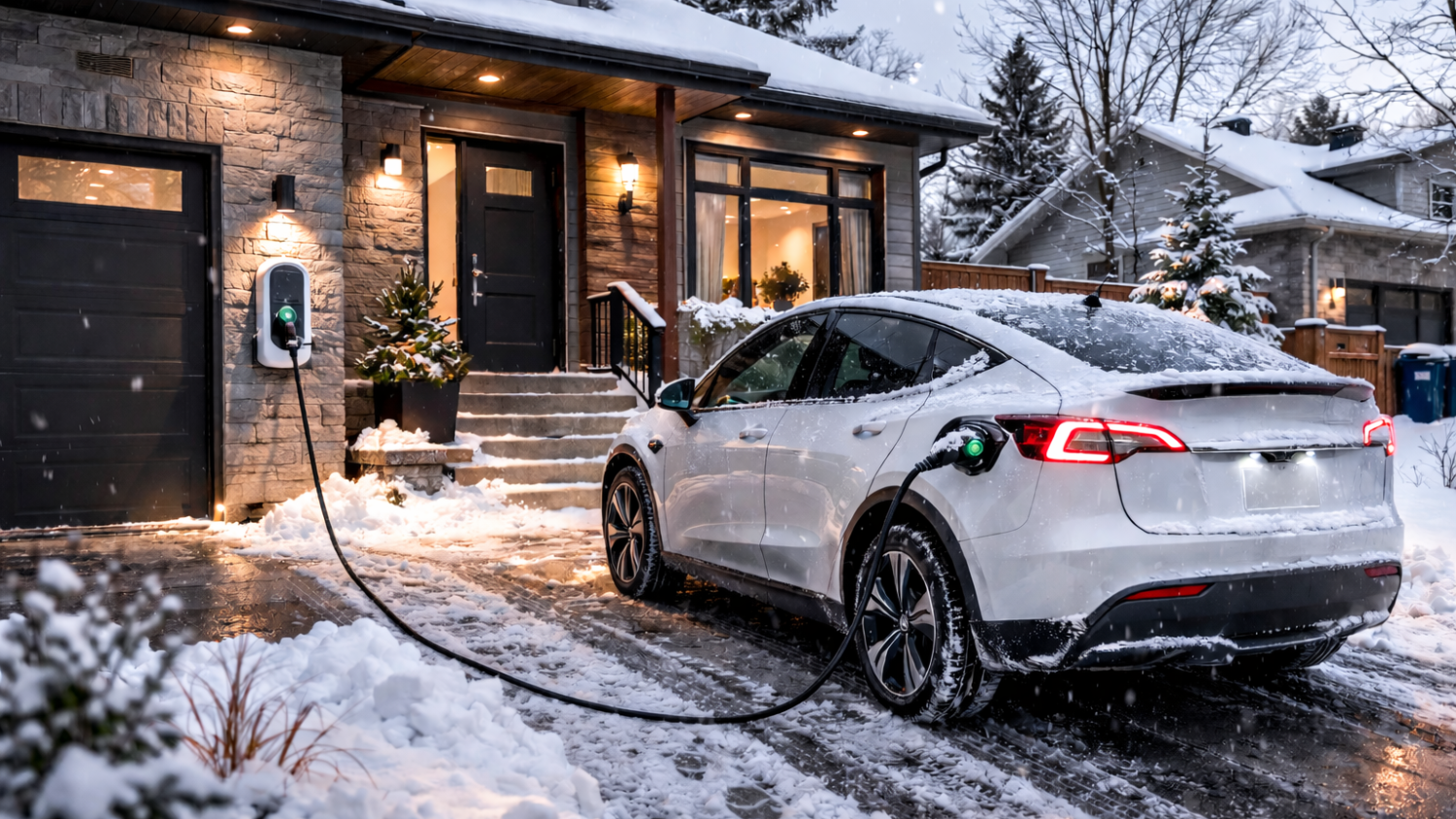
Furthermore, electric vehicles often offer a useful advantage in winter: the heater can be activated remotely while the car is plugged in, allowing the cabin to be preheated without using battery power. Additionally, with climate change, periods of extreme cold are becoming less frequent. Periods of extreme cold that can reduce an electric vehicle’s range are therefore becoming increasingly rare.
Finally, let’s not forget that gasoline-powered vehicles are also affected by the cold! They consume more fuel when temperatures are very low—this is a completely normal phenomenon for both electric and internal combustion engines.
Myth 5: Electric cars are much more expensive
It’s true that some electric vehicle models may have a higher purchase price than comparable gasoline-powered cars. However, this is more of a myth than a reality.
Several government incentive programs can significantly reduce the cost of purchasing an electric vehicle. In Canada, certain financial incentives can amount to several thousand dollars.
In addition, operating costs are generally lower. Electricity is often cheaper than gasoline, and electric vehicles require less maintenance since they have fewer mechanical parts. Many electric vehicle owners therefore see significant savings.
These days, the selection is much more varied than before, meaning that a wide range of EVs are available for under $50,000. It’s therefore not uncommon to be able to buy an electric vehicle for less than a gasoline-powered one!
Myth 6: Electricity costs almost as much as gasoline
Another common misconception is that charging an electric vehicle costs about the same as filling up with gasoline.
In reality, in many regions, charging an electric vehicle is significantly cheaper. In Quebec, for example, the cost of electricity is relatively low, making home charging particularly economical.
Even when using certain paid public charging stations, the cost per kilometer generally remains lower than that of a gasoline-powered vehicle.
Myth 7: Electric car batteries catch fire easily
Some people worry that electric vehicle batteries are dangerous. However, incidents involving batteries are relatively rare. Manufacturers build in numerous safety systems to protect batteries from overheating, short circuits, and damage.
It’s also important to note that fires in gasoline-powered vehicles are much more common, due to the presence of flammable fuel.
Like any vehicle, an electric car must be used and maintained properly, but the risk of fire remains lower than that of traditional gasoline-powered vehicles.
Myth 8: Electric cars need special tires
Some people believe that electric vehicles absolutely require special tires. In reality, electric cars can use the same tires as gasoline-powered vehicles.
That said, some manufacturers now offer tires optimized for electric vehicles. These tires are designed to address certain characteristics unique to EVs, such as their higher weight or instant torque.
They can offer lower rolling resistance, which helps improve range and reduce road noise.
However, these tires are not mandatory, and many standard tires are perfectly suitable for electric vehicles, as long as you ensure you adhere to the manufacturers’ load ratings.
ELECTRIC CARS: BETWEEN MYTH AND REALITY
Like any new technology, electric cars have given rise to numerous concerns and misconceptions over the years. However, rapid technological advancements, improvements in battery technology, and the development of charging infrastructure have transformed the reality of electric mobility.
Today, electric vehicles represent an increasingly accessible, practical, and high-performance option for many drivers. By debunking certain myths, it becomes easier to understand the real benefits of this technology and make an informed choice.