10 More Frequently Asked Questions About Electric Vehicles and Charging Stations
04 August 2026

The electrification of transportation is progressing rapidly in Quebec and Canada, but several issues continue to fuel discussions. Between subsidies, different types of chargers, battery maintenance, and the environmental impact of electric vehicles, it’s not always easy to navigate these topics. To help you make informed decisions, here are the answers to 10 more frequently asked questions from current and future electric vehicle drivers.
1. ARE ELECTRIC VEHICLES STILL ELIGIBLE FOR INCENTIVES?
Incentive programs change regularly based on government policies. Although some programs have been modified or scaled back in recent years, several financial incentives remain available for the purchase of electric vehicles or the installation of charging stations.
The amounts and eligibility criteria vary by province, vehicle type, and current government policies. It is therefore recommended that you review the most recent programs before making a purchase. Even when subsidies decrease, the savings on gas and maintenance often continue to make electric vehicles very cost-effective in the long run.
2. CAN TESLA CHARGING STATIONS CHARGE ALL CARS?
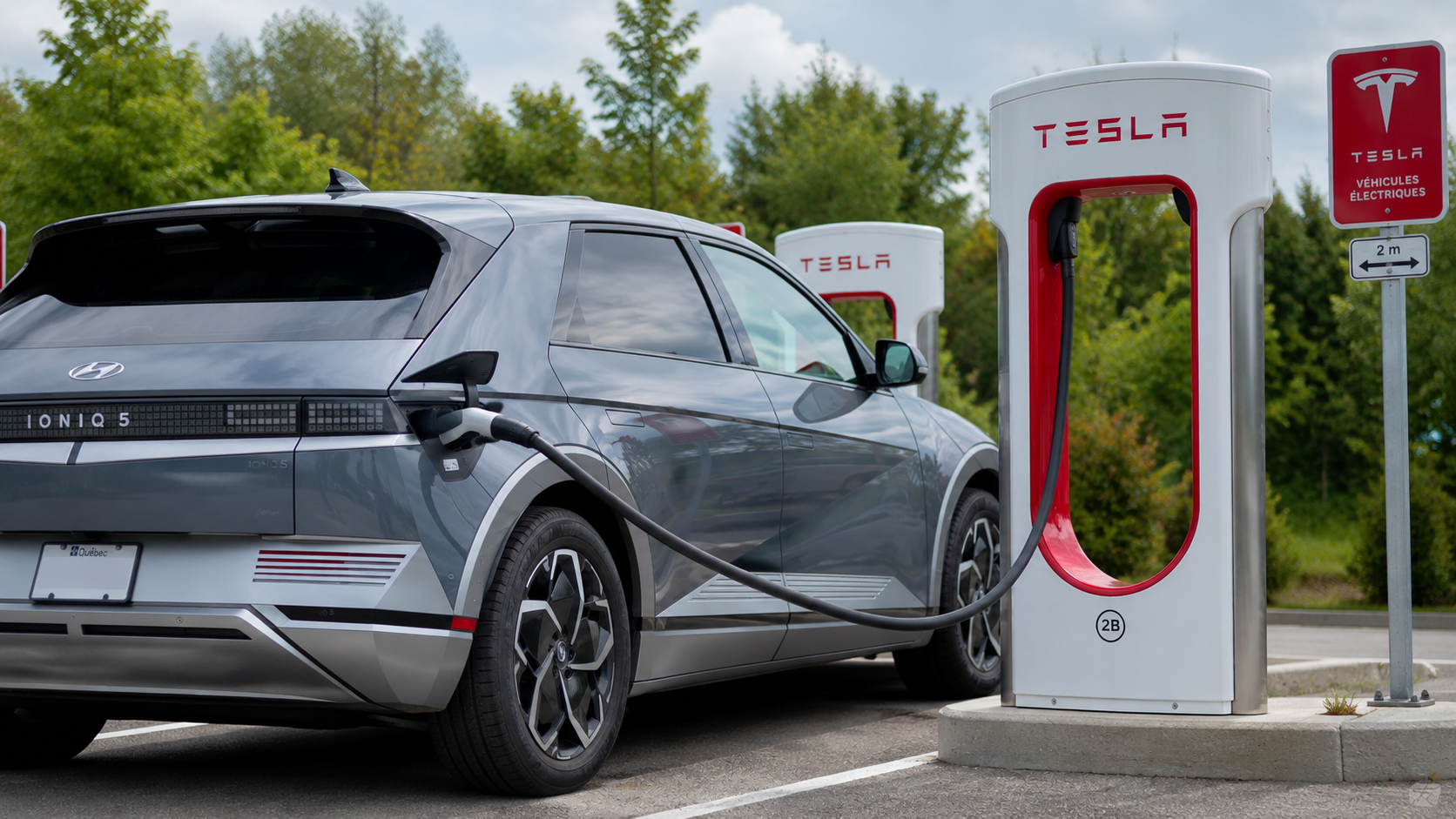
The answer is increasingly “yes.” Historically, Tesla charging stations were reserved for Tesla vehicles. However, the company has gradually opened up part of its network to other automakers.
In addition, several automakers are now adopting the NACS connector, developed by Tesla, to simplify access to its extensive fast-charging network. In some cases, an adapter may be required to ensure compatibility. This development promotes the standardization of charging infrastructure and makes travel easier for a greater number of electric vehicle drivers.
3. WHAT IS THE BEST ELECTRIC CAR FOR QUEBEC WINTERS?
There is no single answer to this question, as needs vary from driver to driver. However, certain models stand out for their advanced thermal management, energy efficiency, and all-wheel drive.
Vehicles equipped with a heat pump generally offer better winter performance by reducing energy consumption for heating. All-wheel-drive models are also valued for their stability on snowy roads. Before choosing a vehicle, it’s important to assess its actual range in winter, the availability of the charging network, and features suited to your region.
4. CAN YOU INSTALL A CHARGING STATION IN A CONDOMINIUM?
Absolutely. Installation is generally more complex than in a single-family home, but that shouldn’t be a barrier. However, condominium associations often need to take into account shared electrical infrastructure, building regulations, and cost allocation.
Many condominium associations in Quebec are currently undertaking projects to facilitate the installation of charging stations for their residents. An electrical study is sometimes necessary to determine available capacity and the work required. Fortunately, several solutions exist today to manage energy consumption and allow for the gradual addition of charging stations in shared parking lots.
5. DOES FAST CHARGING DAMAGE THE BATTERY?
Fast-charging stations are designed to be used safely with compatible vehicles. However, very frequent use of fast charging may slightly accelerate battery degradation over the long term.
Modern battery management systems constantly monitor temperature and charging conditions to minimize negative impacts. For most drivers, occasional or regular use of fast-charging stations poses no major problems. Manufacturers simply recommend prioritizing home charging whenever possible and reserving fast-charging stations primarily for long trips.
6. WHAT IS THE DIFFERENCE BETWEEN NACS AND CCS CONNECTORS?
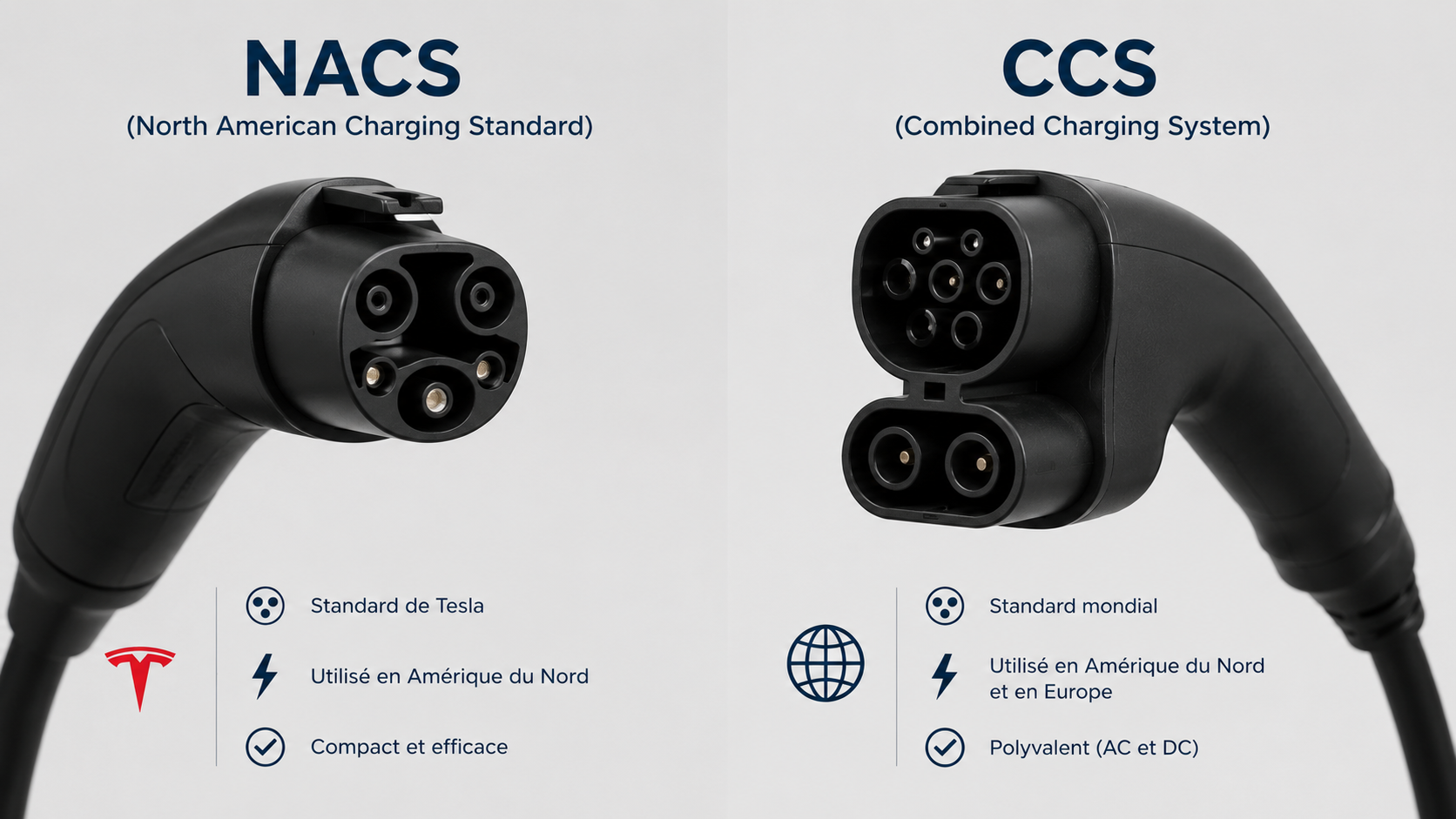
CCS and NACS are two charging standards used in North America. CCS is currently widely adopted by several automakers and supports both Level 2 charging and fast charging.
NACS, developed by Tesla, is rapidly gaining popularity thanks to its more compact design and extensive network of fast-charging stations. Several manufacturers have already announced their intention to adopt this connector in the coming years. This transition aims to simplify the user experience and improve interoperability between different charging networks.
7. IS IT BETTER TO CHARGE TO 80% OR 100%?
For everyday use, many experts recommend keeping the battery charge between 20% and 80%. This practice helps reduce stress on the battery cells and can extend the battery’s lifespan.
However, this doesn’t mean you should completely avoid charging to 100%. When planning a long trip, it’s perfectly acceptable to charge the battery to its maximum capacity to take full advantage of the available range. Many vehicles even allow you to automatically set a daily charging limit to simplify this process.
8. HOW MUCH DOES AN ELECTRIC CAR BATTERY COST?
The cost of a battery varies considerably depending on its capacity, the technology used, and the vehicle model. Although a complete replacement can be a significant expense, this situation remains relatively rare.
Modern batteries are designed to last several years and often several hundred thousand kilometers. Furthermore, their price is gradually decreasing thanks to technological advances and increased global production. For most owners, the battery will easily outlast the warranty period and won’t need to be replaced for many years.
9. CAN YOU USE A GENERATOR TO CHARGE AN ELECTRIC VEHICLE?
Technically, yes, but this solution is generally not recommended for regular use. The generator must be powerful enough and provide a stable current to ensure safe charging.
In certain emergency situations or when engaging in activities in remote areas, a generator can serve as a temporary workaround. However, its energy efficiency remains relatively low compared to charging from the power grid. This solution is therefore primarily considered a backup measure rather than a daily charging method.
10. ARE ELECTRIC VEHICLES REALLY MORE ENVIRONMENTALLY FRIENDLY?
Although their manufacturing generates certain emissions—particularly during battery production—studies generally show that electric vehicles have a smaller environmental footprint than gasoline-powered vehicles over their entire life cycle.
In Quebec, where electricity comes primarily from renewable sources, this advantage is even more pronounced. The longer an electric vehicle is used, the more the emissions associated with its manufacturing are offset. Furthermore, advances in battery recycling and improvements in manufacturing processes are helping to further reduce their environmental impact.
Be Part of the Change
Electric vehicles continue to evolve rapidly, and consumers still have many valid questions. This is a product that’s still relatively new to consumers! Fortunately, technological advances, the expansion of charging networks, and constant improvements in battery technology are making this transition more accessible than ever. Whether you already own an electric vehicle or are considering purchasing one, fully understanding these issues will allow you to take full advantage of the benefits of electric mobility while making decisions tailored to your needs. If you have any other questions, our experts at BEQ Technology are here to help!