What Is Smart Energy Management?
10 August 2026
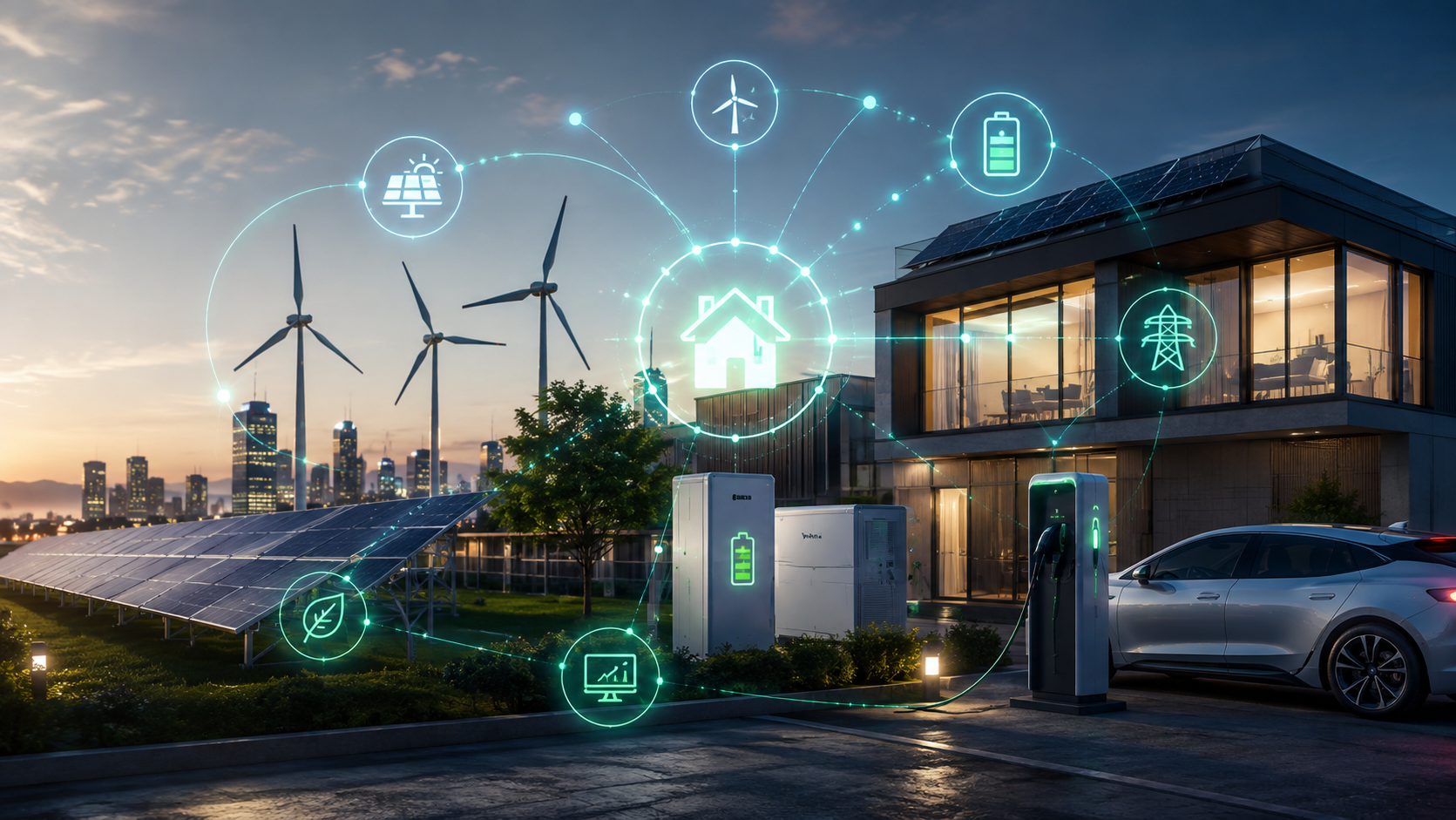
As the number of electric vehicles on the road increases, the need for charging infrastructure continues to grow. For businesses, property managers, condominium associations, and institutions looking to install multiple charging stations, an important question arises: How can all these stations be powered efficiently without overloading the building’s electrical system?
This is where smart energy management comes in. This technology optimizes the use of available energy to power charging stations efficiently, safely, and cost-effectively. But in practical terms, what is smart energy management, and what are its benefits?
WHAT IS SMART ENERGY MANAGEMENT?
Smart energy management involves monitoring and controlling a building’s electricity consumption in real time to optimize the allocation of available energy.
Every building has a limited electrical capacity. When a large number of devices are operating simultaneously—heating, air conditioning, lighting, industrial equipment, or charging stations—the demand for electricity can quickly reach the maximum capacity of the electrical panel.
Without an energy management system, adding multiple charging stations could require a costly upgrade to the electrical infrastructure. With smart energy management, it becomes possible to make better use of existing capacity by automatically adjusting the power distributed to the charging stations based on the building’s actual needs.
HOW DOES ENERGY MANAGEMENT WORK?
An energy management system typically relies on sensors or measuring devices installed in the main electrical panel.
These devices continuously monitor the building’s energy consumption. When they detect an increase in demand from other equipment, they can temporarily reduce the power allocated to the charging stations. Conversely, when overall consumption decreases, more energy can be allocated to the connected vehicles.
This process occurs automatically, without user intervention.
For example, in a commercial building where multiple vehicles are charging, the system can intelligently distribute power among the various charging stations to avoid exceeding available capacity. Each vehicle continues to charge, but the power is adjusted based on priorities and the building’s overall energy consumption.
AN IDEAL SOLUTION FOR PARKING LOTS WITH MULTIPLE CHARGING STATIONS
Smart energy management is particularly beneficial in environments where multiple charging stations are installed.
In apartment buildings, condominiums, businesses, or public parking lots, it is common for multiple users to want to charge their vehicles at the same time. Without energy management, the building’s electrical capacity would often need to be significantly increased to meet this demand.
Thanks to dynamic power sharing—also known as “load balancing”—the charging stations can efficiently share the available energy. The system automatically distributes power among the connected vehicles to optimize charging times while staying within the building’s electrical limits.
This approach makes it possible to deploy more charging stations without undertaking major work on the existing infrastructure.
REDUCE INSTALLATION COSTS
One of the main advantages of smart energy management is the reduction in costs associated with installing charging stations.
Increasing a building’s electrical capacity can represent a significant investment. In some cases, this involves replacing the electrical panel, adding transformers, or even having work performed by the electric utility.
By optimizing the use of existing capacity, energy management often makes it possible to avoid or postpone these major investments.
This solution is particularly attractive for businesses and property managers who want to prepare their facilities for the growing number of electric vehicles while keeping costs under control.
OPTIMIZING BUILDING ENERGY EFFICIENCY
Beyond charging electric vehicles, smart energy management also contributes to improved overall energy efficiency.
By continuously monitoring the building’s energy consumption, managers gain greater insight into their electricity usage patterns. Some systems even allow for the analysis of energy data, the identification of peak periods, and the implementation of optimization strategies.
This approach promotes more responsible energy use while reducing the risk of overloads or service interruptions.
PREPARING FOR THE FUTURE OF ELECTRIC VEHICLES
The number of electric vehicles continues to rise throughout Quebec and Canada. Buildings that install a few charging stations today may need to accommodate many more in the coming years.
Smart energy management is a scalable solution that facilitates this transition. It allows for the gradual addition of new charging stations without having to completely redesign the electrical infrastructure at every stage.
This flexibility is a significant advantage for businesses, condominium associations, municipalities, and parking lot managers who want to meet the future needs of their users.
Technology at the Heart of Modern Charging Infrastructure
As electric mobility grows, smart energy management is becoming an essential component of charging projects. It helps maximize the use of existing resources, reduce infrastructure costs, and ensure a reliable charging experience for users.
Whether for a business, a multi-unit residential building, or a public parking lot, this technology offers an efficient solution for integrating more charging stations while maintaining the stability of the power grid.
At BEQ Technology, we support organizations in planning and deploying charging solutions tailored to their needs. Thanks to advanced energy management technologies, it is possible to optimize existing infrastructure and effectively prepare for the future of electric mobility.